

KEY TAKEAWAYS
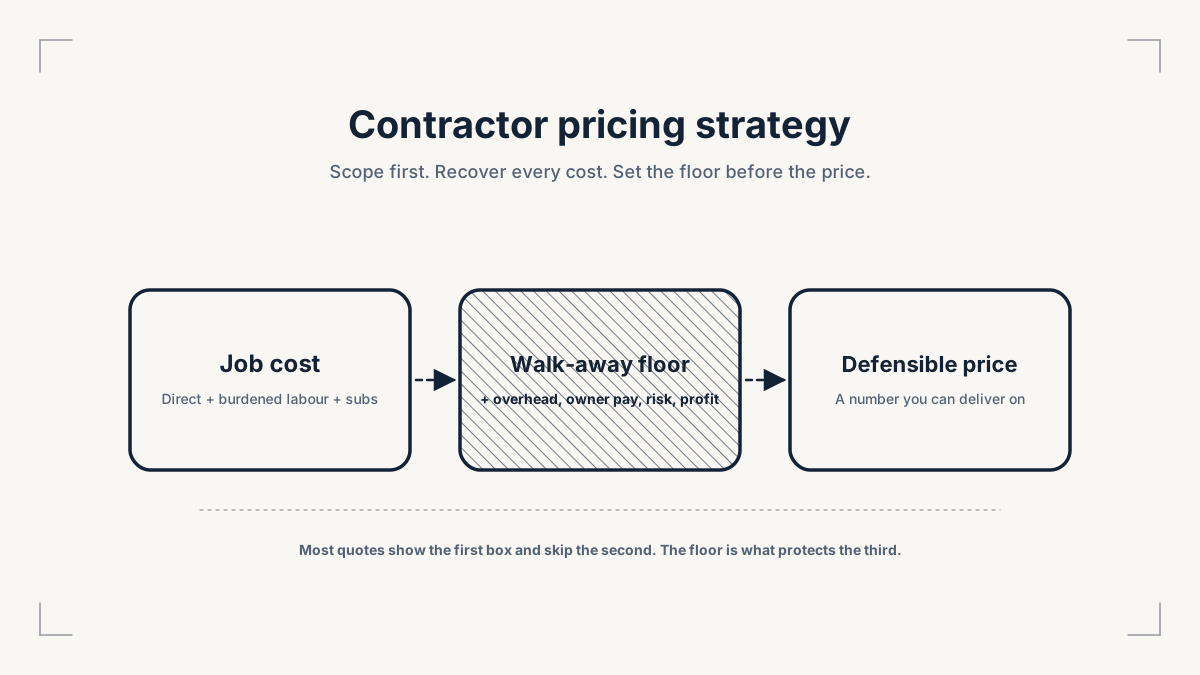
- A contractor pricing strategy is not one markup percentage. It is a repeatable system for recovering direct cost, labor burden, overhead, owner pay, risk, and profit.
- A paying customer is not proof of traction if the work is underpriced.
- Fixed price is risky when scope, site conditions, client decisions, or material costs are uncertain.
- Profit is not owner pay. If the owner only gets paid from whatever is left, the business may be hiding weak economics.
- The best contractors do not defend a higher price with vague quality language. They show the supervision, risk controls, communication, and warranty discipline that justify the number.
If your home improvement business is busy but cash is still thin, the problem is not sales volume.
It is that your contractor pricing strategy covers labor and materials but never pays for the company that delivers the work. Overhead, owner time, risk reserve, and supervision still leak out of every job.
This guide shows how to price home improvement work with direct cost, overhead, owner pay, risk, profit, scope control, and a clear walk-away floor before your next quote leaves the office.
DEFINITION
A contractor pricing strategy is a repeatable method for turning job cost, business overhead, owner compensation, project risk, and target profit into a price the business can deliver profitably.
What is a contractor pricing strategy?
A contractor pricing strategy is a repeatable method for turning job cost, business overhead, owner compensation, project risk, and target profit into a price the business can deliver profitably.
That definition matters because many contractors treat pricing as a number they need to "get right" for a single job. A serious pricing system does something different. It makes each quote answer six questions:
- What will this job directly cost?
- What labor burden and supervision will it require?
- What share of overhead must this job recover?
- What owner time must be paid for before profit?
- What risk, warranty, and change exposure does the job carry?
- What profit must remain after all of that?
That is the difference between quoting and pricing. Quoting produces a number for the client. Pricing protects the company that must deliver the number.
The Forja Pricing Pyramid is a useful way to think about it:
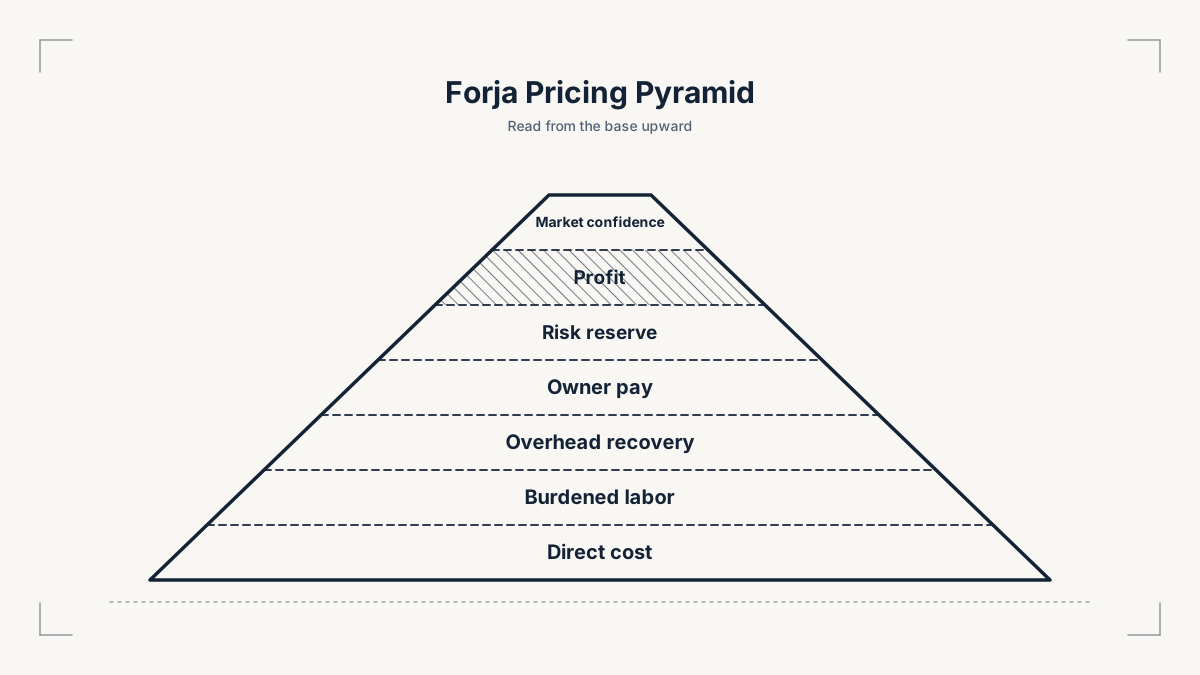
Direct cost
Materials, subcontractors, rentals, permits, disposal, and project-specific purchases
Burdened labor
Wages plus payroll cost, travel, setup, cleanup, supervision, and rework exposure
Overhead recovery
Insurance, vehicles, tools, office/admin, software, sales, estimating, accounting, and management
Owner pay
Compensation for the owner's real work before profit is counted
Risk reserve
Weather, hidden conditions, client changes, safety issues, warranty, and delays
Profit
Return after the job and business are properly paid
Market confidence
The ability to explain the price clearly enough to win the right clients
Most weak pricing fails before profit is even discussed.
Why do home improvement contractors stay busy but still lose margin?
Home improvement contractors often lose margin because they price the visible work and miss the operating economics behind the work.
The visible work is easy to name: materials, labor, subcontractors, permits, and perhaps disposal. The hidden business is harder: insurance, transport, admin, tools, software, site setup, supervision, client communication, safety, warranty exposure, and the owner's time.
That missing layer is why contractors can be fully booked and still short of cash. A job may look profitable if the only costs recorded are materials and labor. It may become unprofitable once estimating time, callbacks, travel, site supervision, change-order delays, insurance, and admin follow-up are included.
This is not just theory. In Forja's founder-signal interview for this article, Raman Arunsi described a recurring pattern among contractors and fit-out providers: they underestimate delivery, rush near the end of the project, use cheaper software or disconnected tools, and then miss the operational details the quote should have priced from the start.
The same pattern appears in contractor forums. In one r/Contractor discussion about charging labor, one contractor asked whether to charge by day rate, hourly rate, square foot, or a combination. Another said recent jobs had serious curveballs beyond the standard contingency allowance. The language is informal, but the business problem is precise: contractors are trying to price custom work with incomplete risk visibility.
The first rule is simple: if the quote only covers what happens on site, it is probably not covering the business.
What costs should be included before profit is calculated?
Profit should be calculated only after the job has recovered its real costs.
For a home improvement contractor, those costs usually sit in six buckets:
Direct materials
Purchased materials, freight, delivery, wastage, storage, and price-validity risk
Burdened labor
Wages, payroll burden, setup, travel, cleanup, disposal, supervision, and likely rework
Subcontractors
Subcontractor quotes, coordination time, schedule risk, and management markup
Job overhead
Site protection, temporary utilities, permits, access equipment, safety, tools, and project admin
Business overhead
Insurance, vehicles, software, phones, rent, accounting, sales, marketing, estimating, and management
Risk and warranty
Hidden conditions, weather, accidents, callbacks, client changes, escalation, and warranty reserve
BuildingAdvisor's guide to pricing jobs explains the same principle from a contractor finance angle: overhead includes the soft costs of being in business, such as trucks, tools, office expenses, accounting, advertising, training, legal, insurance, and other operating costs. If those costs do not appear in the pricing system, they do not disappear. They come out of the owner's pocket or the company's survival margin.
The walk-away floor is the minimum price below which the job should be rejected, re-scoped, or renegotiated.
KEY INSIGHT
Walk-Away Floor = direct costs + burdened labor + overhead allocation + owner-pay allocation + risk reserve + target profit
This is not the same as the final selling price. It is the floor. The final price still has to consider positioning, client value, capacity, demand, and market alternatives. But if the client will not accept a price above the walk-away floor, the contractor is not selling a profitable job. They are buying work.
Before profit is discussed, a serious quote should also define:
- What is included.
- What is excluded.
- What assumptions were used.
- How long the price is valid.
- What triggers a change order.
- Who owns material price increases.
- What happens if site conditions differ from what was visible.
- What warranty is included.
- What client decisions are needed before work starts.
Pricing without these boundaries is not confidence. It is exposure.
Here is a simple worked example.
Assume a contractor is pricing a mid-size renovation with direct job costs of $15,500:
Materials
$8,000
Labor
$5,000
Subcontractor
$2,000
Dumpster, permit, and project-specific fees
$500
Direct job cost
$15,500
If the contractor adds 20% to that number, the quote becomes $18,600. That may look reasonable. It may also be wrong.
The first question is whether $18,600 covers the business behind the job. If the contractor has a 20% overhead recovery requirement, the job needs to contribute $3,100 before profit is even considered. If owner estimating, project management, and supervision require another $1,500 of real owner time, the price floor has already moved to $20,100 before risk and profit.
Now add a risk reserve. If the project has moderate uncertainty, such as client selections, access limits, and some hidden-condition exposure, a $1,500 reserve may be conservative. The job now needs to recover $21,600 before target profit.
If the contractor wants a 15% margin after those costs, the price is not $21,600 plus 15%. The price is:
KEY INSIGHT
$21,600 / (1 - 0.15) = $25,412
That is the difference between a quote that feels competitive and a price that can support delivery. The contractor does not have to present the client with every internal line item, but the contractor must know the floor. Without that floor, negotiation becomes guesswork.
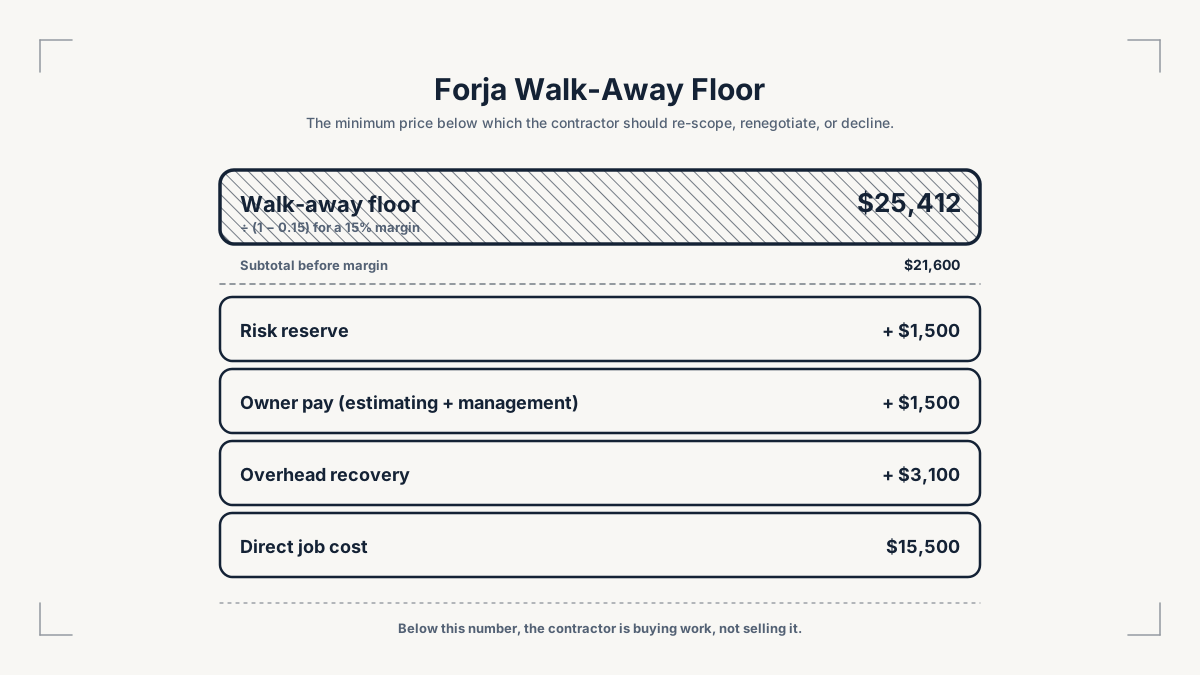
Before your next quote leaves the office, run every cost bucket above with a real dollar value for that specific job. If a row is blank, the price is not ready.
For the deeper math behind this section, see Forja's overhead guide: calculate your true overhead rate.
Use this to calculate the cost floor behind each job.
How should contractors separate owner pay from company profit?
Owner pay is compensation for work. Profit is the business return after work, risk, and capital have been paid for.
Small contractors often confuse the two because the same person sells, estimates, manages, supervises, solves problems, and sometimes performs the trade work. If the owner takes money only when the project has "profit", the numbers will often look better than the business really is.
The owner may be performing three separate roles:
Technician or craft lead
Labor cost or loaded labor rate
Estimator and sales lead
Estimating, site visit, proposal, follow-up, and client education cost
Project manager
Supervision, procurement, scheduling, quality control, client communication, and issue resolution
Those roles should not be treated as free because the owner happens to perform them.
Raman's view is direct: many operators price like employees. They charge for hands-on hours but miss admin, estimating, sales calls, travel, and follow-up. That creates the illusion of margin. In reality, the business is using unpaid owner labor to subsidize the client.
This matters for Forja because a paying customer is not enough. In the Design → Build → Release model, pricing helps prove whether a founder understands the full economics of delivery. If a contestant wins work only by underpricing their own labor and hiding the company's true cost, that is not strong traction. It is a weak business model with revenue attached.
This week, name one specific owner role you currently perform unpaid, set a defensible rate for it, and add it to every quote you send for the next 30 days. The number does not have to be perfect on the first try. It has to exist.
What profit and margin targets are realistic for remodelers?
There is no universal contractor margin target that works for every trade, market, and project type.
The useful question is not "what percentage should I add?" The useful question is "what margin does this business need after cost, overhead, owner pay, and risk?"
Benchmarks can help, but they should not become shortcuts. In April 2026, NAHB reported that residential remodelers in its latest Cost of Doing Business Study averaged a 6.3% net profit margin and a 29.9% gross profit margin in 2024. That is context, not a command. A custom fit-out provider with complex site risk and premium finish expectations should not copy a broad average without testing its own cost structure.
Market context also matters. Harvard's Joint Center for Housing Studies projected that homeowner improvement and maintenance spending would reach $518 billion by the end of 2026, even as growth was expected to ease. A large market does not protect individual contractors from bad pricing. It can actually hide the problem because demand keeps the pipeline full while margin leaks out.
There is also pressure in the cost base. NAHB reported that construction costs accounted for 64.4% of the average new-home price in 2024, a record high in that survey series. That does not translate directly to every remodeling quote, but it reinforces the same operating reality: cost discipline matters.
Markup and margin are often confused:
$10,000
10%
$11,000
9.1%
$10,000
20%
$12,000
16.7%
$10,000
25%
$12,500
20.0%
$10,000
33.3%
$13,330
25.0%
$10,000
50%
$15,000
33.3%
The formula is:
KEY INSIGHT
Required markup = target margin / (1 - target margin)
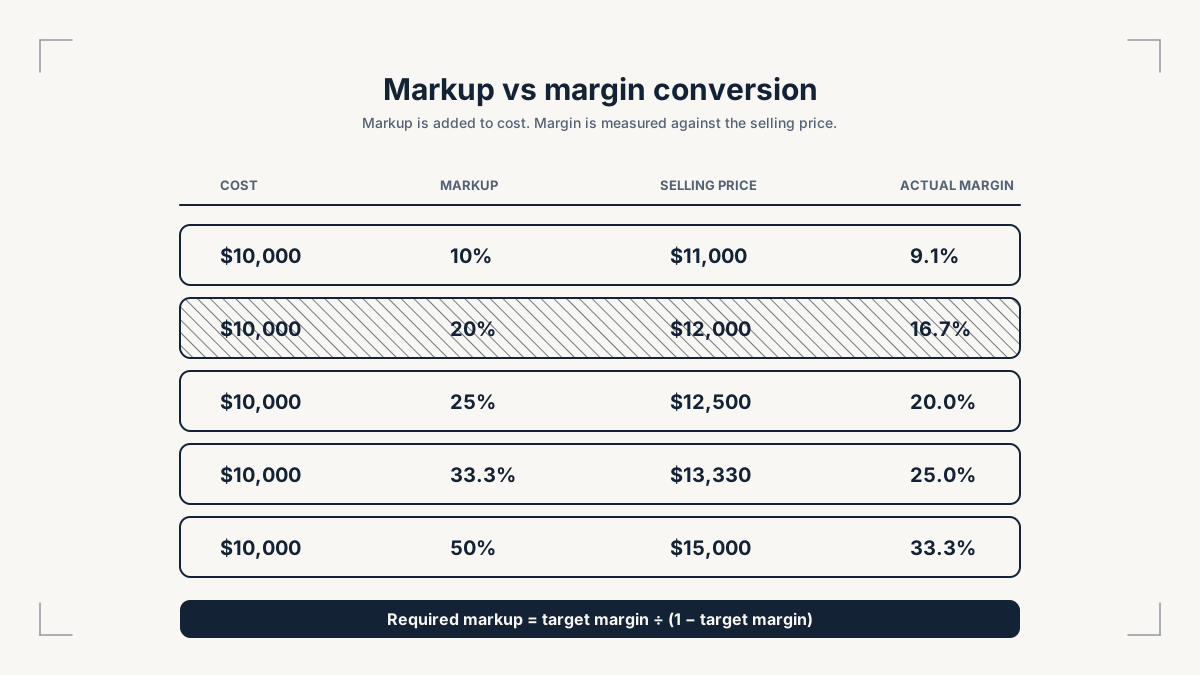
So a contractor who wants a 20% margin needs a 25% markup on cost. A 20% markup produces only a 16.7% margin. That difference is one reason contractors can feel busy, fairly priced, and still under-earning.
The same pressure shows up in the UK. The Federation of Master Builders State of Trade Survey consistently reports that small and medium builders cite material cost, skilled-labor shortages, and rising overhead as the top constraints on profitability. London contractors feel this hardest because site access, parking, congestion charges, and waste removal compress what reaches the contractor's pocket before profit is even discussed. The benchmark numbers differ from the US, but the operating reality is the same: underpriced overhead and unpaid owner time.
The margin target should also match the job type. A routine repeat installation with reliable production data should not carry the same risk reserve as a custom renovation with hidden site conditions, late selections, and multiple trades. When the project is more uncertain, the pricing model should change before the contractor simply adds a bigger percentage.
Which pricing model fits the job's risk?
The right pricing model depends on how clear the scope is and who should carry the uncertainty.
Many articles list pricing models as if the contractor simply chooses one. Guides from Knowify, ServiceTitan, Buildxact, Jobber, and Commusoft all help explain parts of the contractor-pricing problem, but Forja's view is that the model should follow the risk. A repeatable installation, a hidden-condition remodel, and a premium fit-out are not the same pricing problem.
Use this Scope-Risk Pricing Matrix before choosing the model:
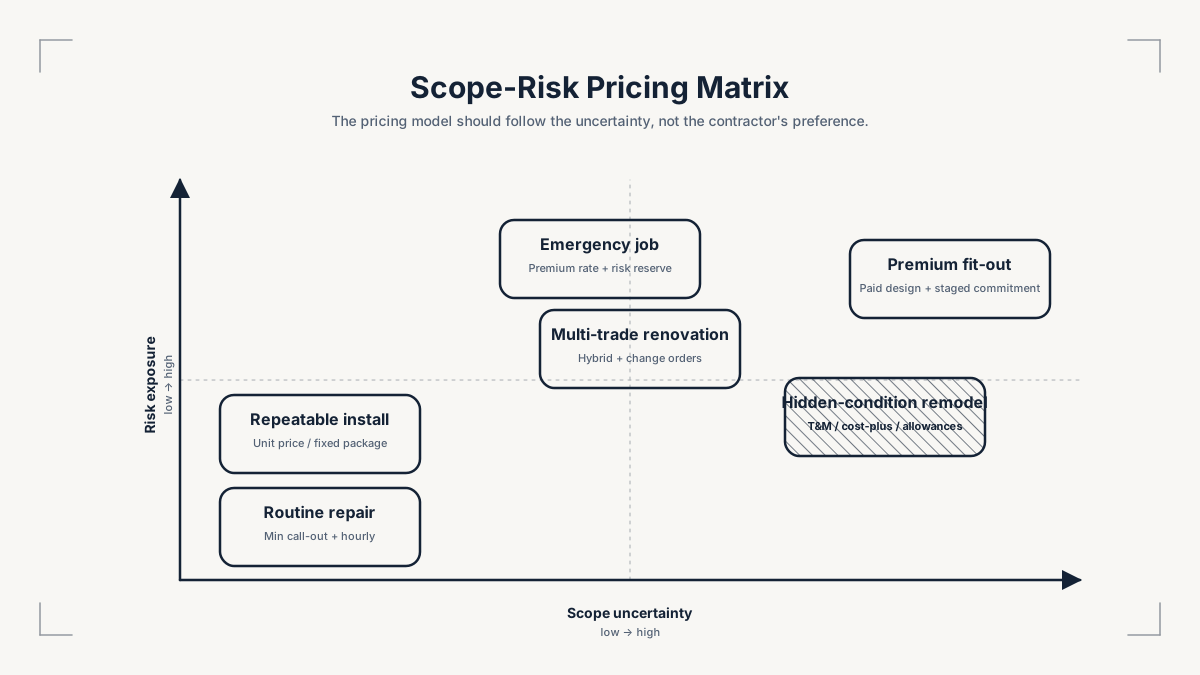
Routine repair
Minimum call-out plus hourly or fixed service price
The job is small, but travel, setup, and admin still need recovery
Repeatable installation
Unit price or fixed package
Scope is known and production data can improve accuracy
Hidden-condition remodel
Time and materials, cost-plus, or fixed scope with allowances
Unknowns should not be silently transferred to the contractor
Multi-trade renovation
Hybrid model with milestones and change-order discipline
Coordination, sequencing, and client decisions create risk
Emergency job
Premium service rate plus risk reserve
Urgency affects labor, scheduling, procurement, and warranty exposure
Premium fit-out
Paid design, detailed scope, staged commitment, and controlled allowances
Custom finish work depends on decisions, procurement, and experience
The matrix is not meant to make pricing complicated. It is meant to stop the contractor from using a fixed price where the job itself is still moving.
For example, painting one known room may fit a fixed price because the scope can be inspected and the contractor has production history. Remodeling an older kitchen after water damage is different. The contractor may not know the substrate condition, electrical changes, flooring transitions, cabinet lead times, or client selections. A fixed number can still be used for defined parts of the job, but the uncertain parts need allowances, exclusions, time and materials, or change-order terms.
This is where many small contractors underprice. They know the trade task, but they do not price the uncertainty around the task. The risk is not only whether the crew can do the work. The risk is whether the job remains the same job after demolition, client decisions, site access, weather, materials, and schedule pressure enter the project.
Raman's position is that fixed price should be used carefully in custom work. A hybrid model is often better: fixed price for known, repeatable parts of the job, with allowances, exclusions, and change-order rules for uncertain parts.
This is especially important in remodeling. Two projects can look similar and still require different labor, materials, sequencing, access, and client decisions. A contractor who imports pricing from a previous project without site verification is not using experience. They are guessing with confidence.
The practical rule:
- Use fixed price when the scope is defined, conditions are visible, and the contractor has production history.
- Use time and materials when the work is exploratory or conditions are unknown.
- Use cost-plus when the client wants transparency and accepts cost variability.
- Use allowances when the client has not made final selections.
- Use change orders when the client changes scope or hidden conditions emerge.
- Use a walk-away floor when the job cannot be delivered profitably within the client's budget.
For a deeper breakdown of contract-model choice, see fixed price versus time and materials.
Use this when the pricing question is who carries project risk.
Why should complex projects include paid estimating or paid design before final quote?
Complex projects should not be priced from a blind quote.
For small, repeatable work, a free estimate may be a reasonable sales cost. For a complete interior design, remodel, roofing correction, or fit-out project, the estimate itself can require site visits, measurements, space planning, supplier checks, scope decisions, and delivery sequencing. That work has value.
Raman described a recent interior design and fit-out project where the contractor sent a quote without fully understanding the scope. The contractor did not visit the site, take proper measurements, or grasp the work required. Roofing calculations were wrong, the roofing work had to be repeated, interior work was delayed, and a planned 3 to 6 month move-in stretched to about a year. By the end, the client had lost trust.
That case is not just a project-management problem. It is a pricing problem. The quote was issued before the contractor had earned the right to know the price.
For complex work, the commitment ladder should look like this:
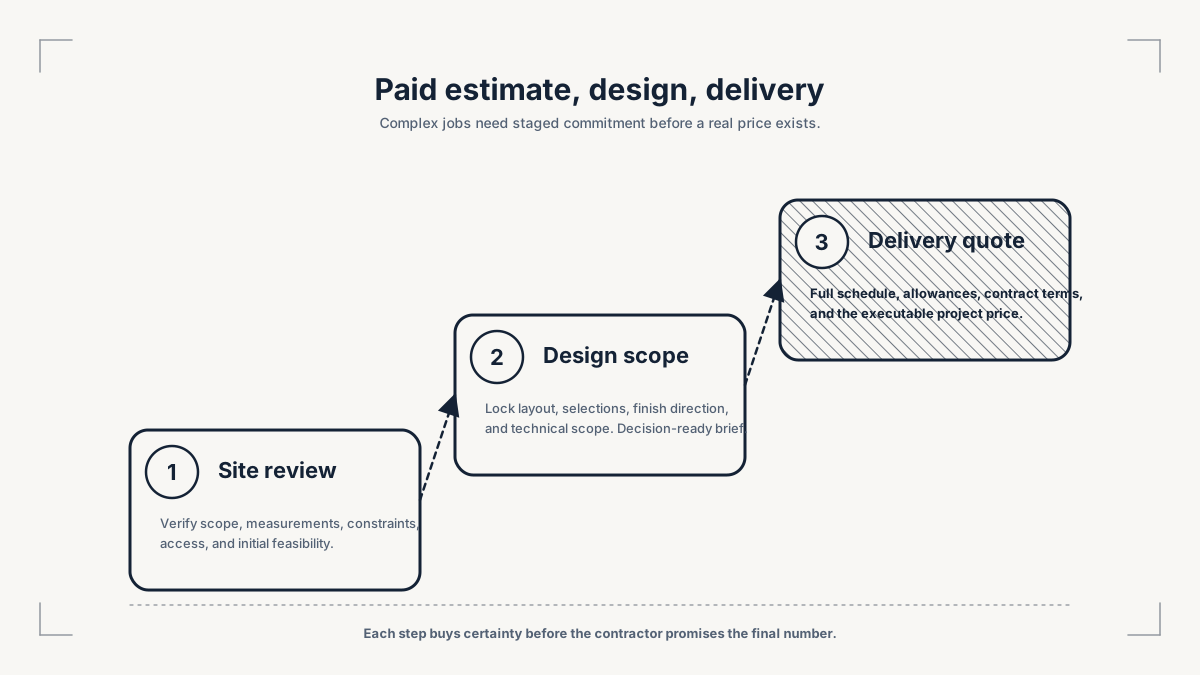
Estimate and site review
Site visit, measurement, constraints, initial scope
Pricing assumptions and feasibility view
Prevents blind quoting
Design or space planning
Layout, selections, finish direction, technical scope
Decision-ready brief
Reduces ambiguity
Delivery quote
Full scope, schedule, risk, allowances, contract terms
Executable project price
Prices the real job
This approach also protects the client. It gives them a cleaner decision. They can pay one party for estimating, another for design, and another for delivery if they want. But they should not expect a serious contractor to absorb real planning work for free on a complex project.
The contractor who gives away too much pre-construction work may appear helpful. They may actually be training the market to undervalue the thinking that protects the project.
THE FORGE
Use the Estimate Margin Audit
Audit the margin in your next estimate before the quote leaves. Score the six controls, see the weakness costing the most margin, and get one partner-tool recommendation matched to the problem.
Use the Estimate Margin AuditHow should contractors price risk, changes, and communication?
Risk should be priced before it becomes a dispute.
The most dangerous project risks are often not exotic. They are ordinary conditions that were not priced properly:
- Power outages.
- Weather delays.
- Material price changes.
- Hidden site defects.
- Access problems.
- Accidents and safety issues.
- Client decision delays.
- Late design changes.
- Warranty callbacks.
- Unclear supervision.
The Bureau of Labor Statistics Producer Price Index release tracks construction in both final demand and intermediate demand measures, including maintenance and repair construction purchased by firms. That is a reminder that contractors operate inside live cost systems, not static price sheets. When costs move, a quote with no escalation logic becomes a risk transfer to the contractor.
Communication also has to be priced. Raman identified client communication and change-order process as two of the most commonly missed pre-profit items. Contractors often become worst at communication when the project is going badly, which is exactly when communication matters most.
Every serious quote should include:
- Scope assumptions.
- Exclusions.
- Selection deadlines.
- Site-condition assumptions.
- Material price-validity period.
- Change-order process.
- Client response times.
- Warranty terms.
- Delay responsibility.
- Payment milestones.
If a contractor does not define these items before work starts, they may still have a price. They do not have a controlled project.
The communication rule is simple: if the client can change the work, the quote must explain how change is handled.
That does not require aggressive contract language. It requires clarity. A contractor can say, "This price assumes the existing substrate is sound. If we discover rot, moisture damage, structural issues, or non-compliant prior work after opening the area, we will pause, document the condition, and price the correction before proceeding." That one sentence can prevent a pricing dispute later.
The same principle applies to selections. If the client has not chosen fixtures, tile, cabinetry, lighting, hardware, or finish level, the quote should not pretend those decisions have no cost impact. Use allowances, selection deadlines, and written change approvals. The contractor is not being difficult. They are protecting the project from vague decisions.
Material escalation and volatile input costs belong inside the price-validity period, risk reserve, and change-order rules before the quote is sent.
The same pattern repeats in Lagos, Abuja, and other West African cities, with sharper distortions. Naira devaluation, imported material price swings, fuel and generator costs, and delays at the port can move a job's direct cost meaningfully between quote and delivery. A fixed price that ignored currency and import risk through 2023 and 2024 often became a loss before the first delivery arrived on site. Serious contractors in these markets build escalation clauses into the quote, hold shorter price-validity windows, or move volatile materials to a cost-plus or allowance basis. The principle does not change in any market: do not absorb risk you did not price.
This week, take the ten-item list above and add the three items most often missing from your past three quotes to your standard proposal template. That is your minimum risk perimeter.
How do you explain a higher price without losing the job?
If you cannot explain why your price is higher, the problem is positioning, not just pricing.
“If you cannot explain why your price is higher, the problem is positioning, not just pricing.”
Raman Arunsi, Forja Insights
That line should sit near every contractor's estimating desk. A higher price is not justified by saying "we do quality work." Every contractor says that. The client needs to see the system that produces the quality, not a promise of it.
Premium work usually costs more because the contractor is paying for things that weaker quotes hide:
- Better material sourcing.
- Skilled labor.
- Proper supervision.
- Clear process.
- Safer work practices.
- Better software and documentation.
- Cleaner client communication.
- Stronger warranty handling.
- Better finishing.
- Realistic scheduling.
Raman uses a simple comparison: a client who buys a Bentley and a client who buys a Toyota Camry are not buying the same thing. That does not mean every contractor should try to sell luxury. It means the contractor must know whether they are selling budget, standard, premium, or luxury delivery, and then price the operating system required to support that promise.
This is where many contractors weaken their own margin. They know their work is better, but they cannot translate that quality into visible proof. The proposal should not only show the number. It should show:
- How the scope was verified.
- What quality controls are included.
- What supervision is provided.
- How client decisions are managed.
- What happens when scope changes.
- What warranty is included.
- What risks are excluded from the price.
Good pricing is not only mathematics. It is trust made visible.
Some contractors lose because they are too expensive for the market, but others lose because they never made the value behind the price clear enough.
This is where a proposal becomes more than a number. A serious proposal can show the client three things:
- The contractor understood the work.
- The contractor understood the risks.
- The contractor has a system to deliver the result without chaos.
The cheapest quote often avoids those details because the details expose cost. A stronger contractor should not hide them. They should use them to explain why their price is different.
For a premium fit-out, the client experience during delivery can be as important as the final finish. If the client feels ignored, surprised, or forced into late decisions, they may stop trusting the contractor before the quality of the work can speak for itself. That is why communication, supervision, and documentation belong inside the price.
Which tools actually help after the pricing system is clear?
Software helps only when the contractor knows what the software must track.
Cheap tools can be expensive if they force the business to duct-tape estimating, job costing, scheduling, CRM, payment tracking, and client communication across disconnected systems. Expensive tools can also be wasteful if the business has no pricing discipline to operationalize.
The right question is not "what is the best software?" The right question is "what pricing failure are we trying to fix?"
Estimates miss scope
Estimating and takeoff
Actual costs are unknown
Job costing
Leads are not qualified
CRM and sales pipeline
Client changes are undocumented
Project management and change-order tools
Cash flow is unstable
Invoicing, payments, and finance tools
Owner cannot see margin by job
Accounting and reporting
Warranty issues repeat
Service and customer-history tracking
This article is not a software ranking. The point is sequence. First build the pricing system. Then choose tools that make the system easier to run.
For sponsors and partners, this distinction matters. Forja Insights should attract serious operators who understand the business problem before they buy the tool. That is a better audience for software, finance, education, and event partners than readers looking for a quick affiliate link.
The order matters:
- Define the pricing system.
- Decide what must be tracked.
- Choose tools that reduce leakage.
- Review actual job results against estimates.
- Adjust the price model quarterly or after major cost changes.
Software cannot fix a contractor who does not know the difference between price, cost, owner pay, and profit. But once that discipline exists, the right tool can make leakage visible. It can show whether labor ran over, whether change orders were captured, whether materials exceeded allowance, whether the lead source produced profitable work, and whether the project manager is carrying too much unpriced coordination.
What does pricing discipline reveal about a Forja contestant?
In Forja, a paying customer is not enough if the work is underpriced.
Forja exists to test whether founders can Design → Build → Release real solutions to real paying customers. But pricing determines whether that paying customer is evidence of traction or evidence of a weak model.
A contestant who wins work by underpricing may look active for a short period. The weakness appears later:
- They cannot deliver at the promised standard.
- They rush the work near the end.
- They use lower-quality labor to protect the quote.
- They avoid proper tools and supervision.
- They fall out with the customer.
- They cannot separate sales price, delivery cost, owner pay, and profit.
Pricing discipline shows whether the founder understands the business they are building. It reveals delivery judgment, commercial confidence, risk awareness, customer communication, and the ability to say no.
For judges, sponsors, and partners, that matters. A founder who cannot price sustainably may still be talented. They may even have demand. But demand without margin is not a durable company.
What is the contractor pricing checklist before the next quote?
Free Tool
Estimate Margin Audit
Audit the margin in your next estimate before the quote leaves the business — where owner pay, overhead, scope, risk, pricing model, and change-order control are quietly eroding profit.
Audit my next estimate5 min · Free · No credit card
Before the next quote, answer these 12 questions:
- Have we verified the site, measurements, access, and visible conditions?
- What exactly is included and excluded?
- What are the direct material and subcontractor costs?
- What is the fully burdened labor cost, including setup, travel, cleanup, and supervision?
- What overhead must this job recover?
- What owner time is required, and how is it paid?
- What risks are likely: weather, hidden conditions, safety, material changes, client delays, warranty?
- Which pricing model fits the risk: fixed price, time and materials, cost-plus, unit rate, allowance, or hybrid?
- What assumptions does the client need to approve?
- What triggers a change order?
- What is the walk-away floor?
- Can we explain why this price is higher or lower than another quote?
If the answer to any of those questions is unclear, the price is not ready.
The contractor does not need to win every job. The contractor needs to win the right jobs at a price that can be delivered profitably, safely, and professionally.
Price the company, not the job
Most contractors who burn out do not lose because their work is bad. They lose because their price never paid for the company required to deliver the work.
Before your next quote leaves the office, run it against the walk-away floor, name the risks the client is asking you to carry, and only then decide the number. The contractor who knows the floor is harder to argue with at the kitchen table, easier to trust on site, and slower to go broke.
