

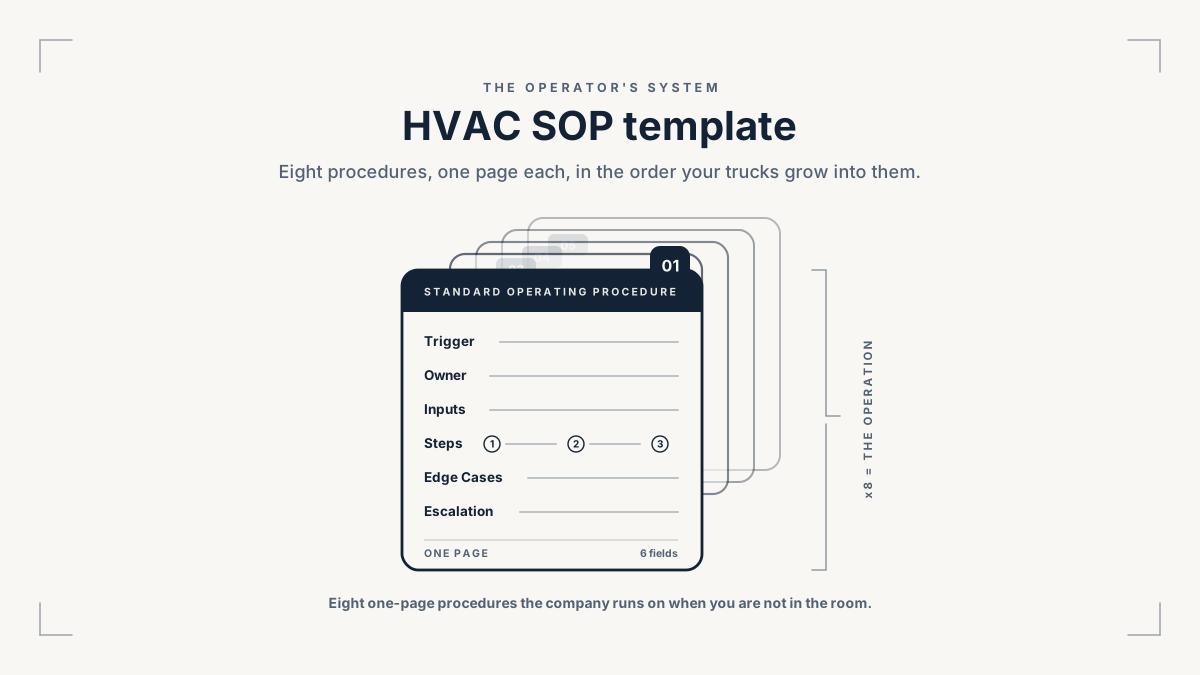
If your HVAC business still depends on you being in the room for every decision, you do not have a business yet. You have a job you cannot quit, and the day a good tech leaves, the knowledge in their head walks out the door with them. This guide hands you the eight standard operating procedures that let the company run without you, the one-page format to write each, and the order to build them in so you write the right one at the right time.
First, a distinction the search results bury. Most "HVAC SOP" pages online are written for facility engineers servicing equipment: filter changes, lockout/tagout, refrigerant handling. This is not that. This is the set of business SOPs an owner-operator uses to run the company, from the phone ringing to the install signed off to the new tech onboarded. If you run the trucks, this is your set.
KEY TAKEAWAYS
- An SOP is a one-page written answer to a question your company faces the same way every week, such as how a call becomes a booked job. If it does not fit one page, it is two SOPs.
- Eight SOPs run an HVAC operation. Most owners try to write forty and finish none.
- Write each one in the same six fields: Trigger, Owner, Inputs, Steps, Edge Cases, Escalation. Same shape every time means a new hire reads any SOP in thirty seconds.
- Build them in stage order, by truck count, not all at once. Dispatch and job delivery earn their place before the hiring SOP does.
- Each SOP protects a specific dollar: a missed call, a botched handoff, a stalled truck, a lost tech. That is why this is the cheapest insurance an operator buys, and why it is what makes the business sellable instead of a job that only works when you show up.
1. Why eight SOPs, not a forty-page manual
Most owners believe systems mean a thick binder, so they either buy a generic SOP pack that does not match how they actually run jobs, or they sit down to write everything, get four pages in, and quit. Both end the same way. The business still lives inside the owner's head, and field service leaders describe the result plainly: processes live in people's heads, the tech who knows how to handle a tricky replacement leaves, and suddenly nobody else knows how to handle that situation.
The fix is to stop thinking about a manual and start thinking about questions. Your operation asks the same small set of questions every week. A call comes in, who books it and how. A customer approves a quote, what happens next. A new tech starts Monday, who shows them the truck. Each recurring question deserves exactly one written answer, and that answer is an SOP.
You do not need a system for everything. You need a system for the eight things that, when they go wrong, cost you a customer or a margin. Get those eight onto paper and the operation holds together when you are not in the room. Everything else can stay informal until it starts to hurt.
2. The one-page SOP format
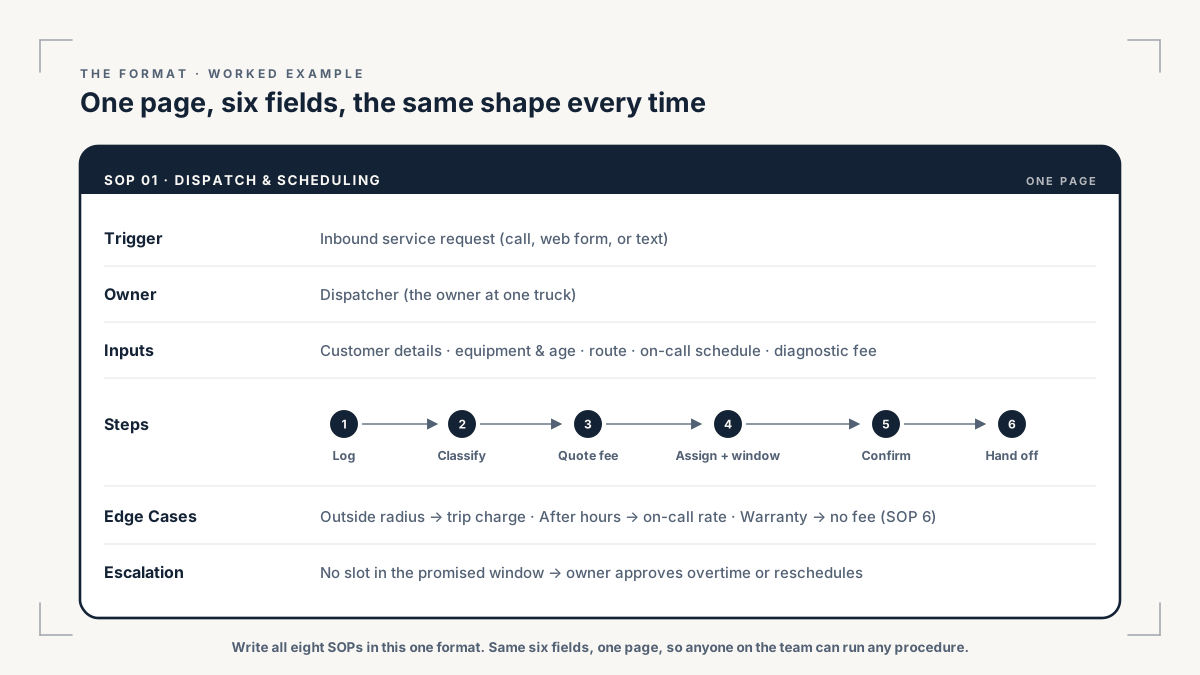
Every SOP you write uses the same six fields. Same shape every time means a tech can pick up any procedure and know exactly where to look.
Trigger
The exact event that starts the procedure. "A service call comes in." "A quote is approved." Name the moment it begins.
Owner
The single role responsible for the outcome. Not a committee. One job title, even in a two-person shop where that title is you.
Inputs
What the owner needs on hand before they start. Customer address, equipment model, the price book, the signed approval.
Steps
The three to seven actions that get it done, numbered, in order. If you need more than seven, you are describing two procedures.
Edge Cases
The two or three exceptions that actually come up. "Customer is not home." "Part is on backorder." Name them so nobody improvises.
Escalation
Who gets called when the steps do not cover it, and when. This is the release valve that keeps a stuck tech from guessing on your reputation.
That is the whole format. Eight pages, not forty, and you can print the blank version from the one-page SOP template to fill in by hand. Now here are the eight.
3. The eight SOPs every HVAC operation needs
Each SOP below is written to copy. Read the one-line job, then the six fields. Keep each to a page when you put it in your own document.
SOP 1: Dispatch and scheduling
Protects the booked call and the first-time fix. First-time fix rates run from 65 percent at the low end to 95 percent for the best operators, and lifting yours by ten points can add $25,000 to $40,000 in revenue per technician a year, according to industry field-service data. It starts at the phone.
Trigger
An inbound service request by phone, web form, or text.
Owner
Dispatcher (the owner at one truck).
Inputs
Customer details, equipment type and age, the symptom, the service radius, today's route and tech locations, the on-call schedule, the diagnostic or trip-fee price.
Steps
1) Capture name, address, phone, equipment, and symptom in one record. 2) Classify urgency: no-heat or no-cool emergency versus routine. 3) Quote the diagnostic or trip fee and confirm the customer accepts before booking. 4) Check the radius, assign the tech, and give a two-hour arrival window. 5) Send a confirmation by text with the tech name, window, and fee. 6) Attach the notes and equipment history to the tech's job card.
Edge Cases
Outside the radius, quote a trip charge first or decline. After hours, route to the on-call rate. A warranty callback, flag it, no diagnostic fee, send to SOP 6.
Escalation
No slot inside the promised window, the owner approves overtime or reschedules personally. An at-risk or angry customer, the owner takes the call.
SOP 2: Paid pre-estimate site visit
Protects you from giving away engineering for free, and qualifies serious buyers. This is the SOP most shops skip, and the one that separates a quote pipeline full of tire-kickers from one full of buyers.
Trigger
A quote that needs an on-site assessment, such as a replacement, a new install, or a multi-system job.
Owner
Senior tech or comfort advisor (the owner early on).
Inputs
The site address, a scope hint, the pre-estimate fee policy, a load-calculation checklist, a measurement sheet, a photo checklist.
Steps
1) Collect the pre-estimate fee at booking, credited to the job if they proceed. 2) On site, run the assessment checklist: load calculation, ductwork, electrical capacity, access, code issues. 3) Photograph the existing system, the nameplate, and the install location. 4) Record measurements and constraints on the sheet. 5) Hand the completed packet to whoever builds the quote within 24 hours.
Edge Cases
The customer balks at the fee, explain it credits to the job and qualifies the work. Access is blocked, reschedule, do not guess at the scope. A commercial or multi-unit job, escalate for scoping.
Escalation
Scope beyond the tech's authority, such as structural or code problems, goes to the owner.
SOP 3: Quote and approval
Protects the price floor. A job started on a verbal maybe is the classic margin leak, and the fix is a recorded yes before anything moves. The floor itself comes from the pricing system every quote has to clear.
Trigger
A completed assessment packet, or a diagnostic with a clear repair scope.
Owner
Estimator or owner.
Inputs
The assessment packet, the price book and the business price floor, good-better-best options, financing options, written terms and conditions.
Steps
1) Price against the floor and never below it. 2) Build good, better, and best with a clear scope for each tier. 3) Present it in writing with totals, exclusions, payment terms, and warranty. 4) Capture a recorded yes, a signature or e-sign, plus the deposit your terms require. 5) Only after recorded approval, release the job to scheduling.
Edge Cases
The customer wants to negotiate below the floor, drop scope, not price. A verbal yes only, do not start, no signature means no schedule. A change after approval, write a new line and get a new approval.
Escalation
Any discount below the floor goes to the owner only.
SOP 4: Install and job delivery
Protects against the half-finished install and the callback. This is the on-site sequence from arrival to sign-off, and it is where the first-time fix is won or lost on the ground.
Trigger
An approved job is scheduled and the parts are staged.
Owner
Lead installer.
Inputs
The signed quote and scope, parts and equipment staged per SOP 8, permits, the install checklist, the commissioning checklist, the customer sign-off sheet.
Steps
1) Confirm parts and the permit before leaving the shop. 2) Protect the site and confirm the scope with the customer on arrival. 3) Install to the checklist and to code. 4) Commission and test: startup readings, airflow, refrigerant charge, safety checks, and record the numbers. 5) Walk the customer through operation. 6) Capture the sign-off and photos. 7) Leave the site clean and close the job card.
Edge Cases
A hidden condition mid-install, stop, document, and get a change-order approval through SOP 3 before continuing. A part arrives dead, see SOP 8. The customer is not home for sign-off, photograph the work and follow up through SOP 6.
Escalation
A safety or code issue, or a scope change over your set dollar limit, goes to the owner.
SOP 5: Maintenance visit
Drives recurring revenue, the cheapest lead source you own. A tight maintenance SOP is what makes a maintenance agreement actually recur instead of lapse.
Trigger
A scheduled maintenance-agreement visit comes due, by season.
Owner
Maintenance tech, scheduled by the dispatcher.
Inputs
The customer agreement and equipment history, the seasonal checklist for cooling or heating, a flag-and-options sheet, the renewal date.
Steps
1) Schedule it proactively from the agreement list, do not wait for the customer to call. 2) Run the full seasonal checklist: coils, filters, refrigerant, electrical, drain, safety, and readings. 3) Record the readings and photos in the equipment history. 4) Flag failing components and present options, quoted through SOP 3. 5) Confirm the next visit and renewal status before leaving.
Edge Cases
Equipment found unsafe, red-tag it and get approval to repair. The customer wants to skip the visit, note it to protect warranty and liability. The agreement has lapsed, offer renewal first.
Escalation
A safety red-tag or a warranty dispute goes to the owner.
SOP 6: Customer follow-up and callback
Protects reputation and repeat business. The callback rate is a margin metric and a trust metric at the same time, and this SOP is how you keep both honest.
Trigger
A job closes (follow-up), or a customer reports a problem after a job (callback).
Owner
Office or customer service; the owner watches the trend.
Inputs
The closed-job list, the review-request script, warranty terms, the callback log.
Steps
Follow-up: 1) Within 24 to 48 hours, confirm satisfaction. 2) Request a review with a direct link. 3) Log the result. Callback: 1) Log the callback against the original job and tech. 2) Triage: workmanship, which is no charge and priority, versus a new unrelated issue, which is a new diagnostic. 3) Dispatch with the original job notes. 4) Resolve, then record the root cause. 5) Review callback rate by tech every month.
Edge Cases
An angry customer, the owner calls. A negative review, respond publicly and fix it offline. A repeat callback on the same job, escalate and root-cause it.
Escalation
A pattern of workmanship callbacks by one tech goes to the owner for training.
SOP 7: Hire and onboard
Protects against the most expensive event in the business. Technician turnover runs 18 to 20 percent a year at $15,000 to $25,000 per replacement, and a new hire needs six to twelve months to reach full productivity (field-service data). With the U.S. Bureau of Labor Statistics projecting about 37,700 HVAC openings a year through 2033, you are always hiring, so the onboarding has to be a system, not a scramble.
Trigger
A hiring need is confirmed, from growth or a departure.
Owner
Owner or office manager.
Inputs
The role one-pager with duties, pay band, and license needs; the truck and tool checklist; the first-two-weeks onboarding plan; the SOP binder itself.
Steps
1) Define the role and pay band before posting. 2) Screen for license, EPA Section 608 certification, driving record, and attitude. 3) Run a ride-along interview and watch the candidate on a real call. 4) Day one: truck, tools, accounts, safety, and the SOP binder. 5) First two weeks: shadow, then supervised solo, signed off against the install and maintenance checklists. 6) Run 30, 60, and 90-day check-ins.
Edge Cases
No licensed candidates, open an apprentice path under supervision. A fast departure leaves a gap, a cross-trained tech runs the dispatch SOP to hold the line. A culture misfit, cut early inside the 90-day window.
Escalation
Any license or compliance gap goes to the owner before that person touches a job.
SOP 8: Material sourcing and inventory
Protects billable hours. The second trip for a missing part is the quiet killer of the first-time fix, and staging the kit the day before is how you stop sending a tech to fail.
Trigger
A job is approved (job parts), or truck or shop stock hits a reorder point (stock parts).
Owner
Lead tech or the inventory owner.
Inputs
The approved job's bill of materials, supplier accounts and lead times, the truck-stock list with reorder points, the staging area.
Steps
1) For each approved job, pull the bill of materials and confirm availability and lead time before you schedule the install. 2) Order job-specific parts to the job and tag them. 3) Stage and verify the kit the day before install. 4) Keep truck stock topped against reorder points for common parts, filters, and fittings. 5) Reconcile used versus returned parts at job close.
Edge Cases
A backorder, reschedule the install proactively and tell the customer, do not send the tech to fail. A wrong or dead part, run the return process, re-source, and log the supplier. An emergency same-day part, use an approved supplier run and log the cost.
Escalation
A job stalled on parts, or a supplier who repeatedly misses, goes to the owner to renegotiate or change suppliers.
Notice what is not on this list: a marketing SOP, an accounting SOP, an HR-policy SOP. Those matter eventually. They are not what holds a field operation together on a busy Tuesday in July. Start with the eight.
4. Write them in this order, by stage
Here is the mistake almost everyone makes. They try to write all eight at once, burn out, and finish none. Write them in the order your trucks grow into them instead. A hiring SOP before a delivery SOP is the second floor before the foundation.
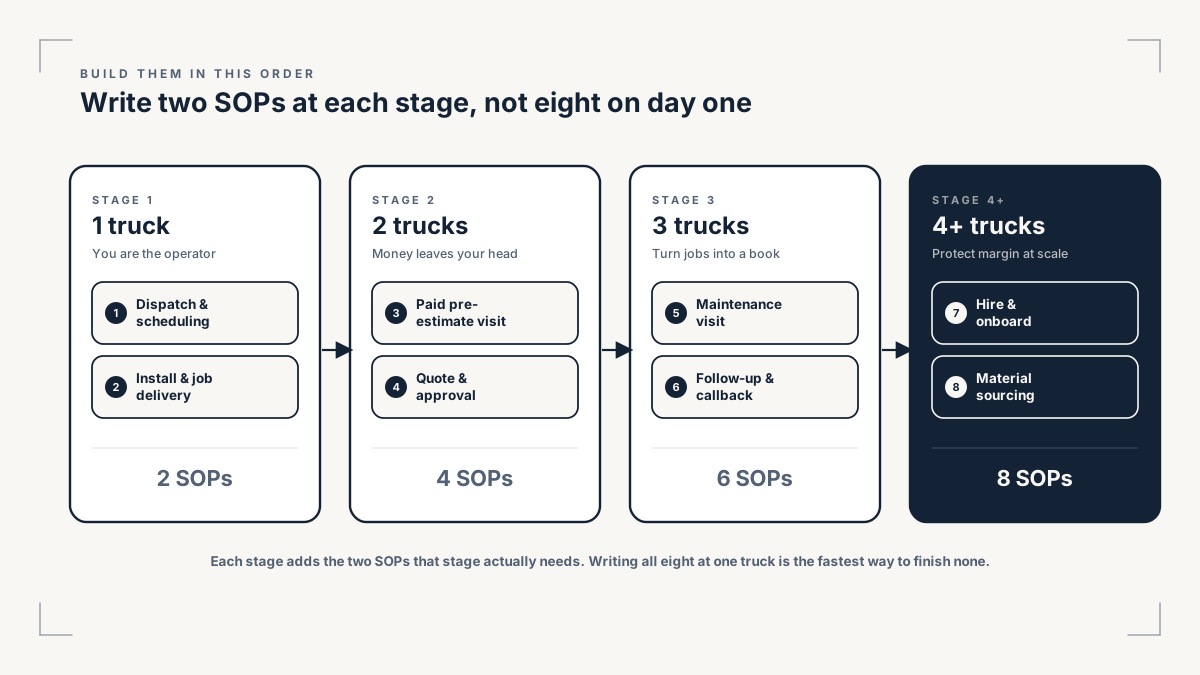
One truck, you are the operator. Write two SOPs first: dispatch and scheduling, and install and job delivery. These two carry the whole operation when it is just you. Prove them on real paying jobs before you add anything. Do not build complexity the work has not demanded yet.
Two trucks. Add the paid pre-estimate SOP and the quote and approval SOP. Now that someone other than you might run an assessment or quote a job, the money side has to be on paper, so a price never depends on your memory of the floor.
Three trucks. Add the maintenance visit SOP and the customer follow-up SOP. By now you have enough completed jobs that recurring revenue and repeat customers are the cheapest growth you have, and these two turn finished work into a book of business.
Four trucks and up. Add the hire-and-onboard SOP and the material sourcing SOP. You are hiring regularly and running enough trucks that parts logistics decide whether a tech bills eight hours or five. These two protect margin at scale.
Knowing the order tells you what to write next and, just as usefully, what to leave alone. A one-truck owner writing a sourcing-and-inventory SOP is polishing a problem they do not have yet.
1
1
Dispatch, Install and delivery
They carry the operation when it is just you
2
2
Paid pre-estimate, Quote and approval
The money side can no longer live in your head
3
3
Maintenance visit, Follow-up and callback
Turn finished jobs into recurring revenue
4+
4+
Hire and onboard, Material sourcing
Protect margin and billable hours at scale
5. The rule for when to write an SOP
Write the SOP the day a mistake costs you money, not before. That is the whole rule.
SOPs written in advance for problems you have never had are guesses, and they read like guesses. SOPs written the week a tech botched a handoff, or a customer got double-booked, or a $1,400 part got ordered twice, are sharp and specific, and they stick, because everyone remembers what the mistake cost.
Here is what that looks like in practice. A plumbing operator I worked with lost two senior installers inside a single month. On paper that should have wrecked his completion rate. It did not. He held a 92 percent on-time completion rate through the gap, because his dispatch SOP described every recurring service type in numbered steps. A newer tech could pick up the procedure and run the day without the two people who left. The SOP was not bureaucracy. It was the only reason the business did not seize up when its most experienced people walked out the door.
That is the real argument. The same architect who taught me this work put it in one line: team continuity is the ceiling on how big the business can get. Your SOPs are how you raise that ceiling, and they are the cheapest insurance you will ever buy against the day someone is sick, quits, or leaves you short in your busy season.
6. When paper SOPs graduate to software
Paper SOPs are the right tool from one truck to a few. They cost nothing, you can write them this week, and they prove the procedure works before you spend a dollar automating it. Most owners do not need software to run the eight SOPs. They need the eight SOPs.
The day paper starts to strain is the day to look at software, not before. You will feel it: three techs run the dispatch SOP three slightly different ways, you cannot see the board from a job site, and the equipment history lives in a folder nobody updates. That is the moment a field service management platform earns its price. The software does not replace the SOP. It enforces the one you already wrote, turns the steps into a workflow, and puts the board on your phone.
Match the tool to your scale. For scaling operators whose dispatching, estimating, and job-costing have outgrown spreadsheets, ServiceTitan is the enterprise-grade option built for exactly that operator. For a growing one-to-five-truck shop that wants scheduling, invoicing, and follow-up in one place without the enterprise weight, Jobber does the same job at a smaller scale. Pick the tool after the SOP, never before. The procedure is the asset. The software is the multiplier.
7. SOPs are your resale lever
There is a longer game here, and most operators miss it until it is too late to fix.
A business that only runs when the owner is on site is not a business. It is a job that pays the owner, and when the owner stops showing up, the value stops. You cannot sell that, and you cannot step back from it. The people who study HVAC ownership transitions say the same thing: how you leave matters more than when you leave, and how you leave is decided years earlier by whether the company can run without you.
A business that runs on written SOPs is a different asset. A buyer, a partner, or a general manager can read the eight procedures and understand how the operation works without the founder in the room. The same eight SOPs that keep your Tuesday in July from falling apart are the thing that makes the company sellable instead of stuck. That is why this template is a spoke off the operator's playbook it comes from: the business plan is the document you run from, and these SOPs are how the company keeps running when you finally step away from the trucks.
THE ONE-PAGE TEMPLATE
Get the printable HVAC SOP template
The six-field format and the eight-SOP build checklist on a single page. Print it, fill in the first two SOPs for your stage, and the operation starts living on paper instead of in your head.
Open the one-page SOP template