

You have a maintenance agreement on your price list, but almost nobody is on it, and the handful of customers who signed up keep canceling at renewal. So you have quietly decided the plan does not work, and you have gone back to chasing the next install. That is the most expensive decision an HVAC owner makes. The agreement is not a discount you hand good customers; it is a system, and right now it is the single thing that decides what your business is worth.
Here is the part the search results bury. HVAC companies now change hands for around 8 times earnings on average, and the size of that multiple is driven almost entirely by recurring revenue. A shop built on one-off installs sits near the bottom of the range, close to 2 to 4 times. A service-heavy, maintenance-focused shop sits near the top, up toward 10 times.
Private equity has been buying up HVAC firms for years now, and they are not paying for trucks. They are paying for the maintenance book. This guide is the operator's system for building one that does not leak: how to find your number, plug the five places plans bleed, attach members at the one moment they say yes, price it for margin, scope it so it cannot turn into a money pit, renew it without handcuffs, and bank what it is worth.
KEY TAKEAWAYS
- A maintenance agreement is a recurring-revenue system, not a discount. The HVAC companies that sell for the highest multiples are the service-heavy, maintenance-focused ones; shops living on one-off installs sell near the bottom of the range.
- Know your attach rate. The average shop converts 15 to 25 percent of customers to a plan. The best convert 40 to 60 percent, and the whole gap is when and how they ask.
- Ask at the moment of highest trust, right after the work is done, using the manufacturer warranty as a bridge into a paid plan.
- Plans leak at five specific points: the offer, the visit, busy-season priority, the billing, and the renewal. Each one has a fix.
- Price for the repair work the plan generates, not the tune-up. Members generate far more revenue than non-members.
- Renew on service, not handcuffs. Make opt-out one step, keep the card on file, and the exit math rewards every point of attach you add.
1. A maintenance agreement is a system, not a discount
Most owners price a maintenance agreement like a favor. Two tune-ups, a small discount, a number that barely covers the visits. They treat it as something nice they do for loyal customers, then wonder why recurring revenue never adds up to anything. The plan is mispriced because it is misunderstood.
Start with a clean definition. An HVAC maintenance agreement is a recurring plan where a homeowner pays a set fee, monthly or yearly, for scheduled tune-ups plus member perks like priority service and a repair discount. For the customer it is comfort and lower bills. For you it is recurring revenue and a retention system. That second word matters more than the first.
The stakes are higher than most owners realize, because someone is already putting a price on your maintenance book. HVAC valuations have climbed about 20 percent above pre-pandemic levels, and the firms commanding the highest multiples are the service-heavy, maintenance-focused ones. As the valuation firm First Page Sage explains, recurring contracts reduce owner dependency and show a stable revenue stream that appeals to almost every acquirer, while companies living on one-off installs and new construction sit at the bottom of the range. Recurring revenue is not a nice-to-have. It is the difference between a job you own and a business you can sell, which is exactly the asset the HVAC business plan is built to create.
Members are also not a discount group. They are your best customers. A household on a plan renews at a far higher rate than a one-time customer and is worth far more to you over the years, because they call you first for every repair and the eventual system replacement instead of shopping around. Every member you sign is not a discounted tune-up. It is a customer who stays, spends more, and calls you first.
2. Find your number: the Recurring-Revenue Maturity Curve
You cannot fix a number you have never calculated, and almost no owner knows their attach rate off the top of their head. It is simple. Count the customers on a plan, divide by your active customers, and that is your attach rate. If 200 households use you and 36 are on a plan, you are at 18 percent.
Eighteen percent sits dead center of the struggling band, and that is where most shops live. Industry benchmarks put the average shop at 15 to 25 percent of customers on a plan, while the best-run programs convert 40 to 60 percent by making the offer the right way at the right time. In the shops I have advised, the strugglers cluster around 15 to 22 percent, and they stay there for one reason: they wait for the customer to ask.
Read that gap carefully, because it is the whole article. The elite shops do not have better customers or better equipment. They ask better. If you are under 20 percent, you do not have a demand problem, you have a leak or a missing offer, and both are fixable.
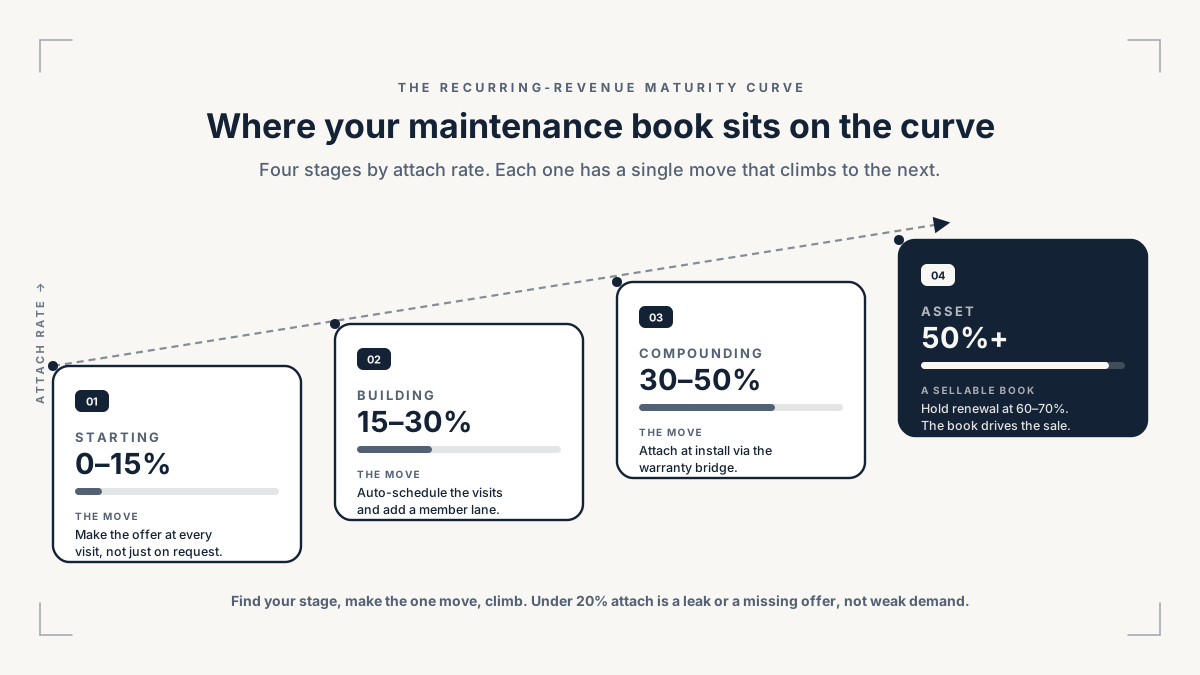
The Maturity Curve places your shop and points at the one move that matters next.
Starting
0 to 15%
Sold only when a client asks
Make the offer at every visit
Building
15 to 30%
Attaching at the service visit
Auto-schedule visits and add a member lane
Compounding
30 to 50%
Attaching at install via the warranty bridge
Card on file, easy opt-out, escalation
Asset
50%+ of revenue
A sellable book buyers pay a premium for
Hold renewal at 60 to 70 percent or better
Do not try to jump three stages. Find the one move for the stage you are in, install it, then climb. The rest of this guide is those moves in order, and the attach-rate worksheet at the end will do this math and set your next target for you.
3. Why plans leak: the five leak points
A maintenance plan does not fail all at once. It leaks, slowly, at five specific points between the sale and the renewal. Find the ones draining your book and patch them in order.
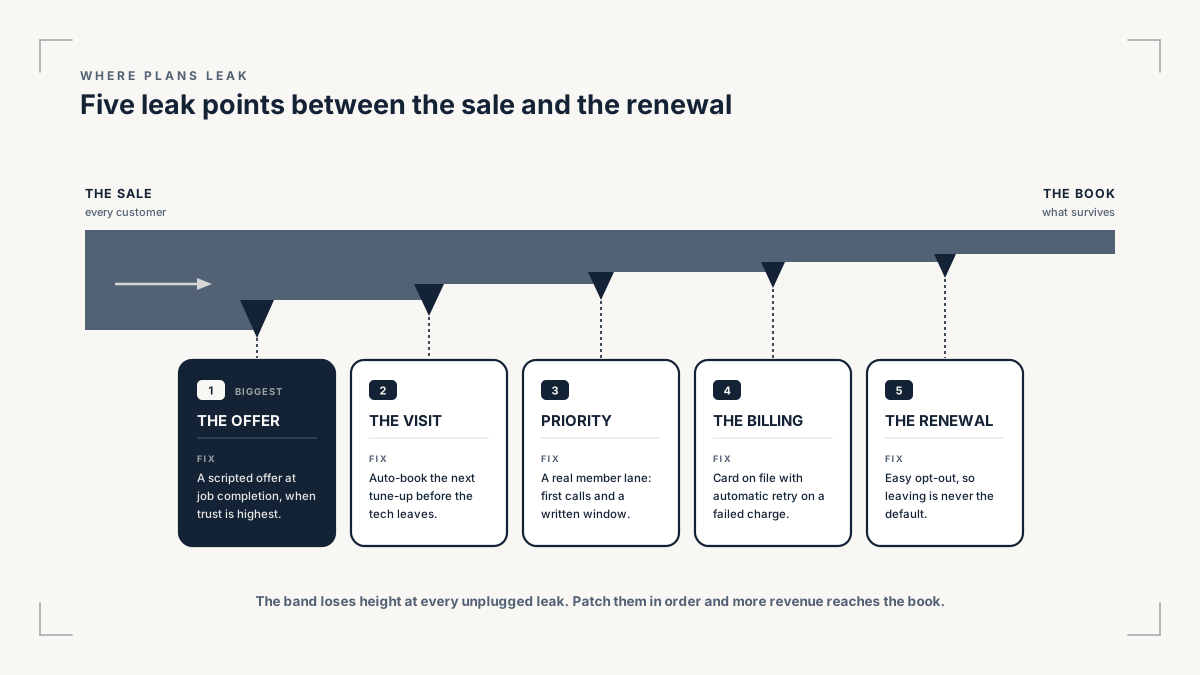
Leak 1, the offer. This is the biggest leak by far, so it gets its own section next. In short: most shops barely pitch the plan, and when they do, the pitch feels like an upsell instead of care, so the customer says no. The fix is a genuinely useful offer made at the right moment, which is section 4.
Leak 2, the delivery. This is the number one contract killer. The shop sells the plan, collects the payment, and then never schedules the tune-up visits. Months later the customer realizes they paid for nothing, feels taken, and cancels. The fix is a maintenance-visit routine that books the next visit before the tech leaves the driveway, the same discipline the dispatch and job-delivery SOPs bring to every other promise you make.
Leak 3, the priority. You promised members they jump the line. Then July hits, members wait three days like everyone else, and they decide the membership is fake. The fix is a real member lane: the first calls of the day held for members, a response window in writing, and the discipline to honor it when you are slammed. A priority promise you break in August costs you the renewal in March.
Leak 4, the billing. A member's card expires, the charge fails, nobody follows up, and the plan lapses without anyone deciding to cancel. This silent churn is pure loss. The fix is keeping the card on file with automatic retry, so a failed payment becomes a quick text asking them to update it, not a cancellation. This is exactly the recurring billing and dunning that a platform like ServiceTitan runs for you once your book is large enough to justify the software.
Leak 5, the renewal. If renewing requires the customer to opt in every year, leaving becomes the default. People forget, and you lose members who were never unhappy. The fix is easy opt-out renewal with the terms set up front, and it matters enough that it has its own section near the end.
4. The biggest leak is the offer: attach at the moment of highest trust
Go back to the number that should change your week. Average shops convert 15 to 25 percent of customers to a plan. The best convert 40 to 60 percent.
The difference is not price or product. It is timing and framing. The best shops ask at job completion, the moment trust is highest, right after the tech has solved the problem and the customer is grateful.
The mistake that keeps shops stuck is waiting for the customer to ask about a maintenance plan. By the time a homeowner thinks to ask, weeks have passed, the relief of the repair has faded, and the offer lands cold. The single most common way owners kill their own maintenance revenue is that they barely try to sell it, and when they do, they pick the worst possible moment. You have to make the offer while you are standing in their home and the system is humming again.
The cleanest way to do that is a bridge from the warranty into the plan. Alongside a new unit, include an extended labor or parts service window at no extra charge for the first four to six months, then convert it to a paid plan at renewal. The manufacturer warranty is your on-ramp. The customer already values the year of coverage that came with the equipment, so you are layering your service on top of something they already trust, at the exact moment they are happiest with you. By the time the included window ends, they have seen you show up, and renewing is an easy yes.
Here is the offer in plain words, the kind a tech can say without sounding like a salesperson:
DEFINITION
“Mr. Reyes, your system is running well now, and the easiest way to keep it that way through the summer is our maintenance plan. It is two tune-ups a year, it puts you first in line on the hottest days, and it takes 15 percent off any repair. Since you just had this work done, I will include the first six months at no extra charge, so you would only start at renewal. Want me to set it up before I head out?”
Look at why it works, line by line. It opens in the present tense, with the win the customer just felt. It names three concrete benefits, not vague value: tune-ups, priority, and a discount. The included window removes all risk, so saying yes costs nothing today. And it closes with a single, simple question at the peak of trust. No pressure, no jargon, and the word contract never appears.
I have lived the other side of this as a buyer, and it is why I trust the mechanic. When I bought an air conditioner, the seller included the installation at no extra charge and added a six-month service window on top of the one-year manufacturer warranty. That offer earned so much trust that I was glad to pay for two more services afterward, and I went back and bought more from the same seller. That is the whole system in one story. Trust at the point of sale converts into recurring revenue, into add-on purchases, and into referrals to the people you know.
So make the offer the rule, not the exception. Every install, every tune-up, scripted and consistent, made while you are still in the home. Just ask, but only with an offer that is genuinely worth a yes. When the offer is that good, asking is a service, not a sale.
5. Price it for margin, not just revenue
Pricing is where owners freeze. They do not know what to charge, so they guess low, and then they resent every visit. Here is a rule you can set today, plus the worked math and the market reference points so you can pick the model that fits.
My rule is to build a 5 to 15 percent maintenance buffer into every install and replacement, and to price the plan at a 20 to 25 percent premium over bare-cost service. Work it through on a real job. On a $6,000 install, a 10 percent buffer sets aside $600 to fund the next two years of visits before the plan earns a dollar.
Price the plan near $180 a year, which is roughly 20 to 25 percent over a $145 bare-cost tune-up. Run each in-plan visit at about 60 to 80 percent of your normal per-visit rate, so the member discount is real but the visit is never underwater. Now the plan is profitable on its own, before a single repair is added.
For comparison, here is what the wider market charges, so you have options:
National average
~$110 / year ($9 / month)
Baseline maintenance
Common 2026 structure
$99 to $199 / year, or $19 / month
Tune-ups plus member perks, on auto-pay
Tiered residential
~$199 / $299 / $399
Basic, then priority and repair discount, then quarterly and parts
On margin, price the plan at your true service-delivery cost plus 30 to 50 percent. Most residential plans land between 99 and 199 dollars a year on auto-pay, which is the structure most shops are moving to because it smooths cash flow and reduces lapses.
The most important pricing truth is where the money actually is. The plan itself should be profitable, but the real return is the repair and replacement work it pulls. A household on a plan is worth far more over its lifetime than a one-time customer, because you are first in line for every repair and the eventual system replacement. So price the plan to win the relationship, not to win the tune-up, and hold every repair quote it generates to the price floor your pricing system sets.
6. Scope it so it can't bleed (and so the value is defensible)
Owners overthink scope. They try to write a document that covers every possible scenario and end up with a plan nobody understands and everybody can argue with. Keep it simple, and anchor the coverage to two things: what the customer bought, and a real standard.
That standard already exists. ANSI/ASHRAE/ACCA Standard 180 defines the minimum inspection and maintenance tasks for HVAC systems, so build your tiers on it instead of inventing a checklist from scratch. Anchor the plan to the equipment you service or installed, then shape three clean tiers that mirror your pricing: scheduled tune-ups at the base, priority service and a repair discount in the middle, quarterly visits and parts coverage at the top.
What should never go in the agreement is open-ended language. “Everything is covered” and unlimited emergency labor are how a plan turns into a money pit the first time a compressor fails on a holiday weekend. Name what is included, name what is excluded, and put a clear boundary on emergency response. Scope protects both sides, and it is what keeps a busy plan profitable.
One small wording choice costs shops sales for no reason. Call it an agreement or a membership, not a contract. “Contract” reads as a trap the customer is being locked into, while “agreement” reads as something mutual. It is a one-word change that costs nothing and lifts your close rate.
Finally, arm your techs to defend the value, because the customer who asks “is this a waste of money?” is killing your attach rate at the door. The answer is not a sales pitch, it is data. ENERGY STAR, the program run by the EPA and the Department of Energy, is blunt about it: dirt and neglect are the top causes of heating and cooling system failure and inefficiency, and a neglected system works harder, runs up energy costs, and fails early.
Heating and cooling already account for close to half of a typical home's energy bill, so a system kept at peak performance saves real money every month and lasts years longer. A member is not buying two tune-ups. They are buying lower bills, fewer breakdowns, and a system that lasts. Teach the tech to say exactly that.
7. Renew on service, not handcuffs
The instinct, once you have a member, is to lock them in with a long contract and a cancellation fee. That instinct backfires. A customer who feels trapped resents you, cancels the moment they can, and tells people why. Hard handcuffs do not protect recurring revenue, they poison the referrals that grow it.
The principle is to win on service, not handcuffs. Make opt-out a single, simple step, keep the card on file so renewal is automatic, and then make the service so good that nobody wants to leave. When canceling is one click and members still stay, you have a real business. When they only stay because leaving is hard, you have a churn problem hiding behind fine print.
Build a gentle escalation in from day one, a small annual increase tied to your rising costs, disclosed up front so renewal is never a fight. Pair that with the billing fix from leak 4: a card on file with automatic retry turns a failed payment into a quick text instead of a lost member. Aim for a 60 to 70 percent renewal rate as your floor, and know that genuinely good service pushes it much higher.
This is where the Forja lens on maintenance agreements differs from the vendor playbooks. Done right, churn stays low, the customer has faith in what you sell them, and that faith transfers. They believe your next recommendation, they refer you to neighbors and friends and colleagues, and they buy the add-ons you offer. The agreement is not a revenue trick. It is the trust compounder the whole business sits on.
8. What it's all worth: the exit math owners never run
Now return to the stakes from the start, because this is the part that should change how you treat every plan you sell. Your maintenance book does not just pay you this year. It sets what your company sells for, and the math is bigger than most owners imagine.
The multiple is set by recurring revenue. According to First Page Sage's 2025 data, HVAC companies average around 8 times earnings, but the range runs from roughly 2.4 times for small, one-off-dependent shops to nearly 11 times for large, service-heavy, maintenance-focused platforms. A small residential shop with a real service base sits around 6 times. The same shop living on one-off installs sits near the bottom.
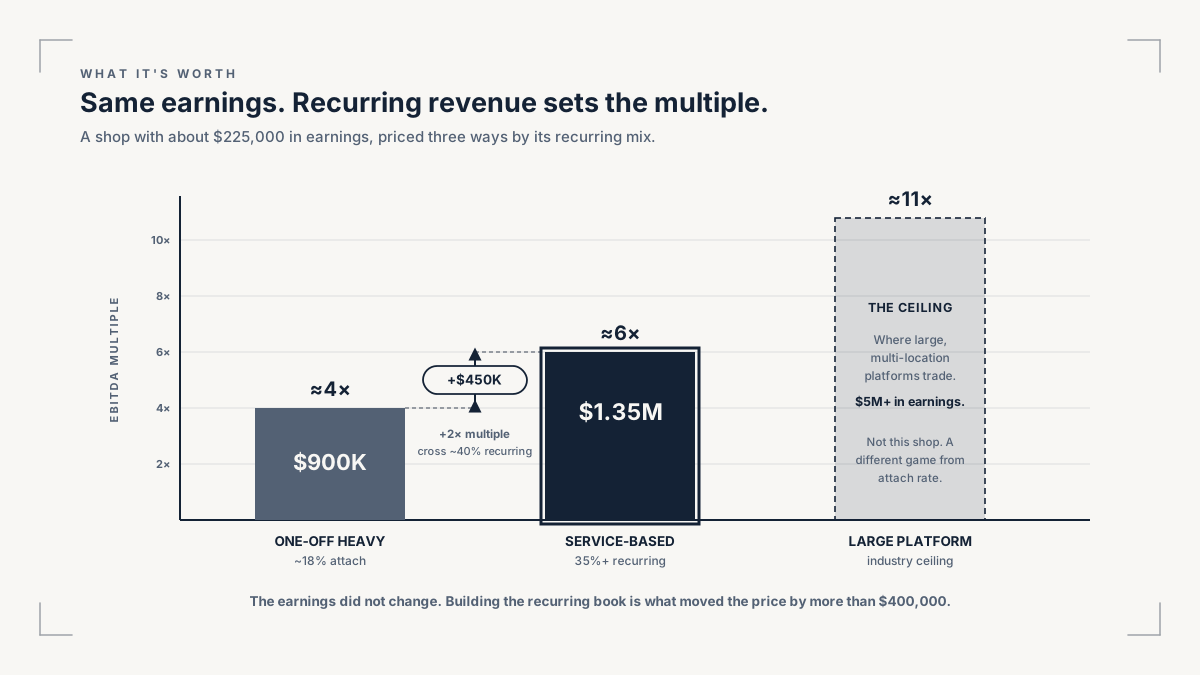
Put real numbers on it. Take a shop doing $1.5 million a year at a 15 percent margin, so about $225,000 in earnings. Stuck at 18 percent attach and heavy on one-off work, it sells near 4 times, around $900,000.
Build the book to 35 percent or more recurring, and the same earnings cross into the roughly 6-times range a service-based residential shop commands, around $1.35 million. Those 17 points of attach did not add one year of plan fees. They added more than $400,000 to the sale price, on top of all the higher-margin repair work the members generated along the way.
Sit with what that means. Every point of attach you add is worth a multiple of that revenue the day you sell, not just twelve months of tune-ups. The maintenance agreement is the clearest example of the recurring-revenue compounder at the center of the HVAC business plan: the asset you build now that pays every month for years, and then pays again, much larger, at the exit.
THE TEMPLATE + WORKSHEET
Build the plan that doesn't leak
The maintenance-agreement template and the attach-rate worksheet on one page. Build a plan anchored to the equipment and a real standard, then measure your attach rate and find the one move that climbs to the next stage.
Open the maintenance-agreement template